What buyers usually want to know before choosing a skin care factory
If you are comparing a skin care factory for private-label facial products, the real question is rarely just “Can they fill bottles?” More often, sourcing teams need to know whether the supplier can handle formulation control, packaging compatibility, labeling discipline, and the kind of batch consistency that keeps a skincare line from drifting over time. A pump bottle for a face serum or moisturizer may look simple on a product page, but in manufacturing terms it sits at the intersection of cosmetic formulation and packaging, and that is where many projects either become stable products or turn into constant rework.
For buyers in retail skincare, salons, spa resale, or e-commerce branding, the factory choice affects far more than cost. It shapes how the product dispenses, how it travels through the supply chain, and whether the final item feels premium or merely functional. A skincare manufacturer that understands both cosmetic filling and presentation has a better chance of giving you a product that sells cleanly and ships safely.
Why pump-bottle skincare products need more than a basic filling line
The product type described here is a facial skincare cosmetic, likely a serum, lotion, or moisturizer in a pump bottle. That format sounds ordinary, but the packaging choice carries practical consequences. Pump dispensers are valued because they support controlled dosing, reduce direct finger contact, and make daily use easier for customers. In a retail setting, those details matter because consumers often judge a product by how it feels in the hand before they have any long-term opinion about the formula.
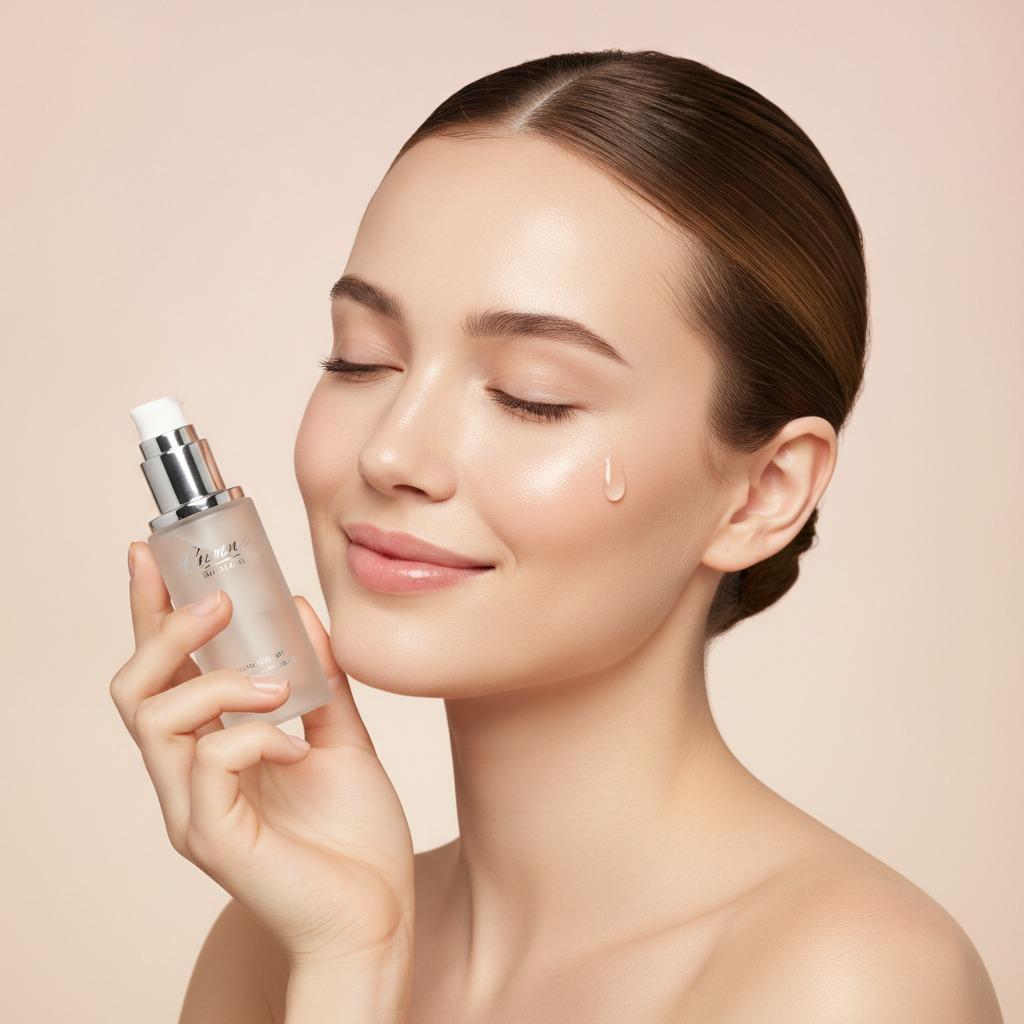
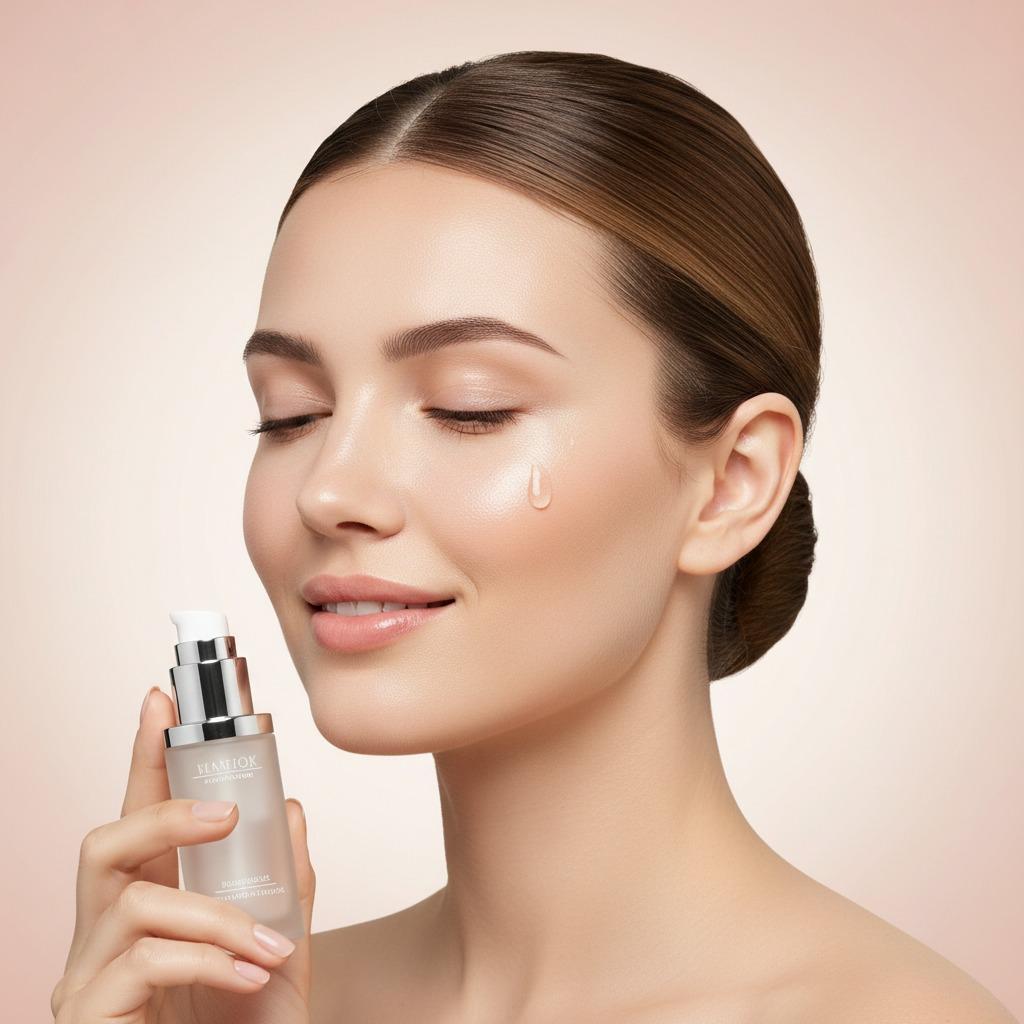
The visible bottle is frosted or matte translucent, with a white pump and a metallic silver collar. The surface finish suggests a clean, minimal presentation that suits modern skincare branding. The bottle may be rigid plastic or glass, but that cannot be confirmed from appearance alone, and it is worth treating that uncertainty seriously during sourcing. Different container materials affect filling behavior, shipping weight, breakage risk, and how well the package works with a chosen formula.
Opaque or semi-opaque packaging can also help reduce light exposure, although that is only a general packaging advantage unless the supplier has test data to prove compatibility. Buyers should resist reading too much into appearance. A beautiful bottle is not the same thing as a reliable package system.
Quick reference: what this format is good for
Best-fit use cases
This kind of pump bottle is a practical fit for daily face-care products, especially those intended for repeat use rather than one-time sampling. It works well for private-label cosmetics, beauty salon retail shelves, spa resale counters, and e-commerce skincare listings where the image needs to feel neat and professional.
What the format does well
The controlled pump action helps with portioning. The handheld size is convenient for vanity use and travel. The minimal labeling style can support a premium or clinical brand direction. And if the container is indeed opaque or frosted, it may offer a more protective presentation than a fully clear bottle.
What the format does not guarantee
It does not tell you the ingredient quality, the stability of the formula, or whether the dispenser will remain reliable through the product’s shelf life. It also does not prove the bottle is airless. Buyers sometimes assume a matte pump pack is airless because it feels modern, but that is not a safe assumption.
How a skincare manufacturer should think about formulation and packaging together
A competent cosmetics manufacturer does not separate formula and package as if they are unrelated departments. They are part of one system. A serum with a light, fast-moving texture may perform well in a standard pump. A thicker lotion may need a different pump head or neck finish. Some formulas interact with certain plastics or closures over time, especially when oils, fragrances, or active ingredients are involved. That is one reason pilot fills and compatibility checks matter.
In a typical cosmetic production flow, the factory will handle formulation or formula approval, then coordinate packaging procurement, bottle filling, pump assembly, and final inspection. If the supplier offers OEM/ODM services, that can simplify early-stage development because the buyer is not forced to source every component independently. Still, OEM support is only useful when the factory documents what it is doing and can repeat the result.
For a buyer, the practical issue is not whether the supplier can make one nice sample. It is whether they can produce the same result across repeated runs without changing the feel of the pump, the look of the finish, or the fill consistency.
Selection criteria that matter in real sourcing work
There are a few questions worth asking a potential skin care factory before moving forward.
First, ask what types of cosmetic products they regularly handle. A factory that mainly works with creams may not be the best match for low-viscosity serums, and vice versa. Viscosity affects dispensing more than many first-time buyers expect.
Second, ask how they manage packaging compatibility. The bottle, collar, pump, and formula should be considered together. If the product is sensitive to light or air, the packaging choice should reflect that, not just the branding mood board.
Third, ask how they control labeling and appearance. Minimal labeling can look elegant, but it also leaves less room to hide inconsistencies. Scratches, mismatched collars, crooked pumps, or uneven print placement become obvious quickly.
Fourth, ask about batch inspection and shipping handling. SAIL’s broader manufacturing background is in heavy-duty transport, where consistency, inspection discipline, and export logistics are central. While that is a different industry, the same commercial principle applies: a factory with strong process control usually creates less friction for distributors. For cosmetics, that means fewer surprises during packing, storage, and transit.
Common mistakes buyers make when sourcing pump-packaged skincare
One mistake is choosing packaging before agreeing on formula behavior. The bottle may look right, but if the product is too thick for the pump, the customer experience will be poor from day one.
Another mistake is assuming frosted or translucent packaging automatically improves shelf life. It may help with light exposure in a general sense, but without verified data, that remains a cautious observation rather than a promise.
A third mistake is underestimating the importance of the neck and collar assembly. The visible silver collar gives the package a polished look, yet the real issue is whether the closure system seals properly and stays stable during transport. Cosmetic buyers sometimes focus on the front-facing look and ignore the mechanics until leakage appears.
A fourth mistake is overloading a clean package with marketing claims. The minimal style of this product suggests a brand that wants the packaging to speak quietly. That works only if the copy, ingredients, and product positioning are equally disciplined. Otherwise the bottle and the message start to feel disconnected.
Practical advice for private-label and retail buyers
If you are building a private-label skincare line, start with the user experience you want. Do you need a daily moisturizer with a soft pump feel? A serum with precise dosing? A salon retail item that looks upscale on a counter? Once that is clear, ask the skincare manufacturer to show how the container and closure support that use case.
You should also clarify whether the bottle is intended for standard pump use or an airless-style system. Those are not interchangeable in performance or cost, and the difference matters when a formula is sensitive to oxidation or when a brand wants a specific dispensing feel.
For e-commerce, packaging durability deserves extra attention. Handled repeatedly in warehouses and delivery networks, a product with a fragile closure or poorly fitted pump can become a returns problem faster than expected. A slightly heavier-duty closure or better secondary packaging may be worth more than a cosmetic flourish that looks attractive in photos but adds risk in transit.
Where a factory like SAIL fits in the broader sourcing picture
SAIL is known primarily as a heavy-duty transport manufacturer, with semi-trailers, trucks, and auto parts at the core of its business. That is not the same category as skincare production, so buyers should keep the distinction clear. Still, the company information shows a broader manufacturing mindset: advanced production capability, OEM/ODM support, global export experience, and quality systems including ISO 9001, SGS, and TUV references in the supplied material.
For readers evaluating suppliers, that kind of process-oriented background is useful as a reminder of what good manufacturing looks like: documented procedures, repeatability, export readiness, and attention to inspection. In cosmetics, those habits matter just as much as they do in transport equipment, even if the product itself is completely different.
FAQ: fast answers for sourcing teams
Is a pump bottle always better than a jar?
Not always. A pump is often better for hygiene and controlled dosing, while a jar may suit thicker creams or products that require fingertip application. The formula should decide the pack, not the other way around.
Can I assume this bottle is glass?
No. The image suggests a rigid translucent bottle, but the material cannot be confirmed from appearance alone.
Does minimal labeling mean the product is premium?
Not by itself. Minimal design can look premium, but the print quality, closure fit, and overall consistency are what make it credible.
What should I request from a supplier first?
Ask for packaging specifications, formula compatibility notes, and a sample that matches the intended final fill and closure system. If possible, review how the product performs after handling and storage, not just on the day the sample arrives.
Next step for buyers comparing suppliers
If your project is a pump-packaged face serum, lotion, or moisturizer, treat the sourcing decision as a package-and-formula match, not a bottle purchase. The right skin care factory should be able to explain material options, dispensing behavior, filling method, and how the product will hold up in real distribution. That is the difference between a cosmetic that looks ready and one that is ready.
For private-label or OEM work, ask for clear packaging details before you place any volume order. The more ordinary the bottle looks, the more important it is to check the parts you cannot see in a product photo.